


Wabi-Sabi in Japan and Europe: Between Aesthetics and a Way of Life

When people in the Western context talk about wabi-sabi, they usually do so with a degree of certainty. They think they know what it’s all about: raw simplicity, imperfection, natural materials; an alternative to perfection. And yet this is precisely where the first shift begins.
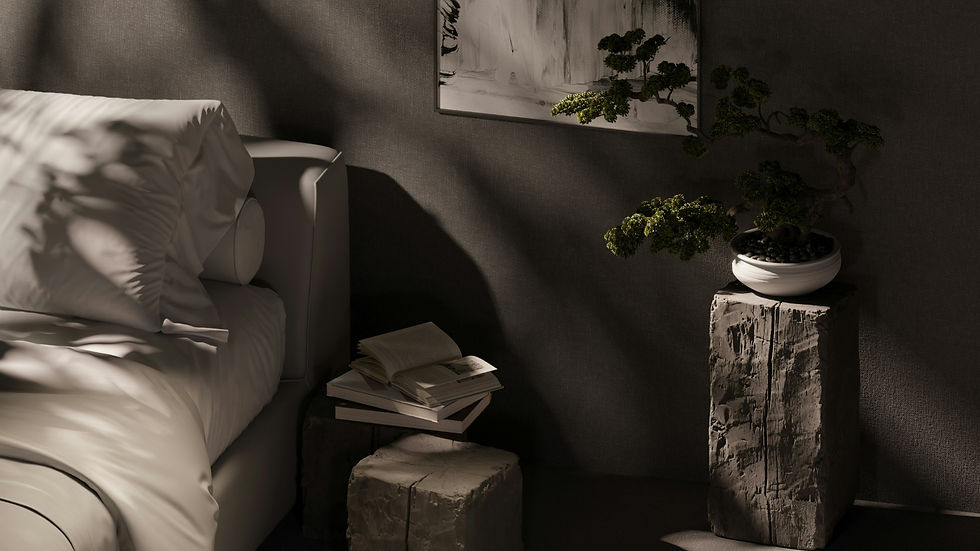
After all, wabi-sabi defies a clear definition. Is it an aesthetic or a philosophy? A lifestyle or an inner attitude? Or something in between?
Wabi-Sabi in the Japanese Context
In its Japanese context, wabi-sabi is often described as one of the central aesthetics of Zen Buddhism. This characterization is accurate, though not exhaustive.
For this aesthetic is not merely a matter of appearance. It is an expression of a worldview characterized by impermanence (mujō), emptiness (kū), and imperfection. The visible—patina and asymmetry, cool colors and quiet spaces—is merely the surface of a deeper context.

Wabi-Sabi zeigt sich nicht nur im Objekt, sondern im Umgang mit ihm. Das Stück altern lassen und doch nicht vernachlässigen. Die Veränderung aushalten, anstatt sie zu bekämpfen: Es ist eine Ästhetik, die ohne Praxis kaum denkbar ist.
Western Reception
In Europe, however, wabi-sabi is often interpreted as a design style. Through minimalist spaces, matte surfaces, and “authentic” materials, imperfection is deliberately incorporated into the design. This interpretation is not incorrect, but it is selective: it separates the form from its origins and translates it into a visual vocabulary that fits well into contemporary discourses on sustainability, deceleration, and mindfulness.

Dabei geschieht eine fast unmerkliche Transformation: Aus einer gewachsenen Wahrnehmung wird eine bewusste Entscheidung, und aus einer gelebten Haltung ein ästhetisches Ideal.
Aesthetics or philosophy?
The question of whether wabi-sabi is an aesthetic or a philosophy is therefore difficult to answer.
As an aesthetic, wabi-sabi describes a particular way of seeing.
As a practice, it describes a particular way of being.
The difficulty in categorizing stems from the fact that Western terms tend to separate what, in the original context, is intertwined. “Aesthetic” often appears here as something superficial, “philosophy” as something abstract. Wabi-Sabi, however, like other aesthetics rooted in Zen Buddhism, moves precisely between these levels. Yūgen, a significant aesthetic of Zen Buddhism little known in the West, describes not beauty itself, but the profound feeling it evokes within you.

A subtle difference
Perhaps the difference can be summarized as follows:
In the Japanese context, wabi-sabi is something that unfolds over time through use, age, and experience. In the Western context, it is often deliberately created. Both can lead to similar visual results, but the underlying process is different.
This difference becomes particularly apparent in the practice of kintsugi: The repair is not merely an aesthetic intervention, but part of an attitude toward the object and its history. Wabi-sabi begins where this history is not shaped, but allowed to unfold.
Bei diesem Artikel wurde KI für die Ausformulierung zu hilfe genommen. Thema, Bildauswahl und Korrekturen an der Ausformulierung sind ohne KI erstellt worden.


Comments