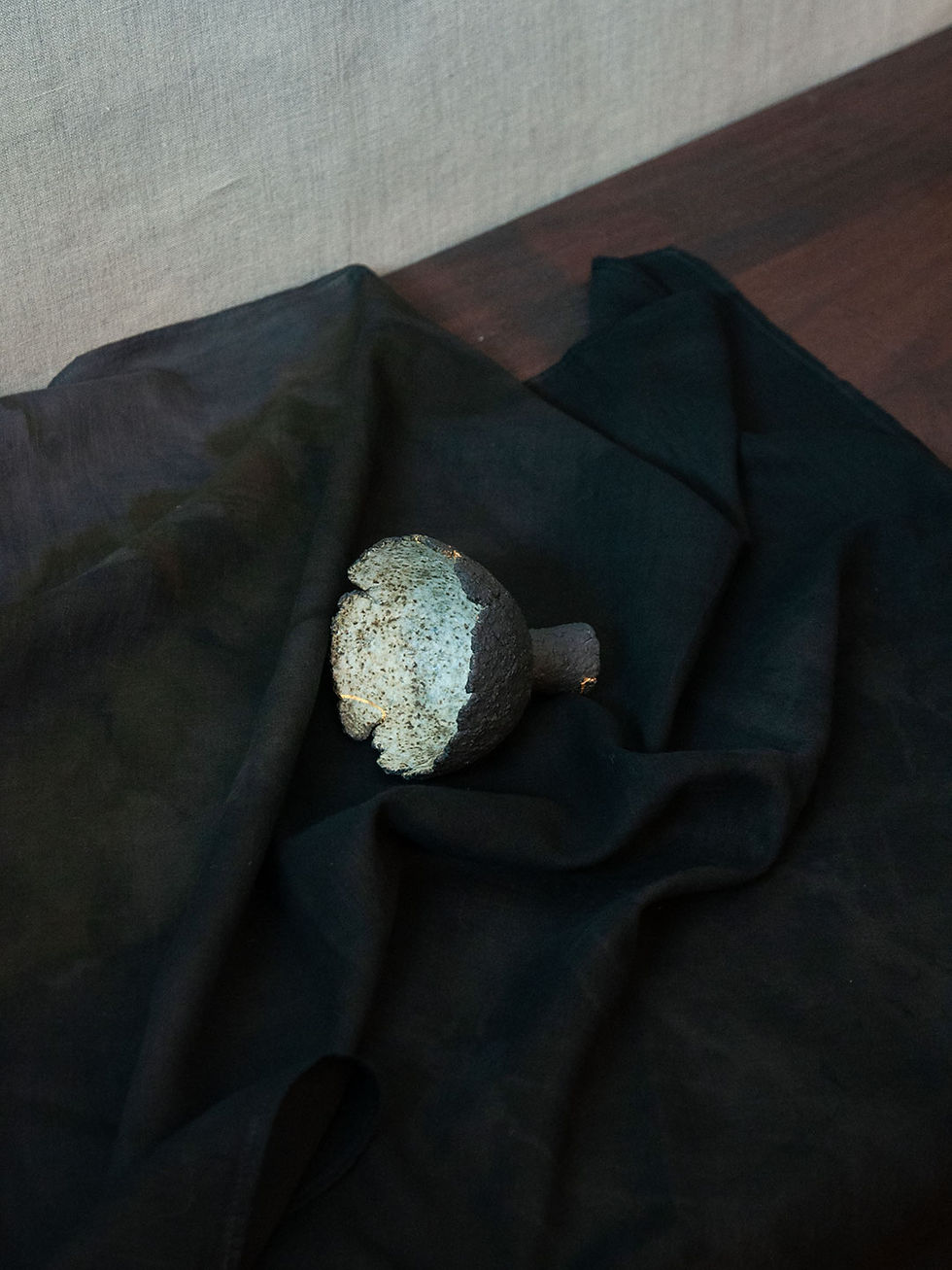
KINTSUGI & KUSAKI-ZOME
DESIGN IN TUNE WITH NATURE AND TIME
Kusaki-zome 草木染め is a Japanese dyeing method that uses natural, everyday materials such as flowers, herbs, vegetable peels, coffee grounds, and tea leaves to dye fabrics. The term itself means “plant dyeing,” and this ancient practice is deeply rooted in Japan's cultural heritage.
Like kintsugi, kusaki-zome has a deep connection to both slow production and a conscious use of materials. The two methods honor what is already there rather than covering it up, creating value not through perfection but through attention to what already exists.

EVA LENZ-COLLIER
Kintsugi
Eva Lenz-Collier has her roots in fine art and graphic design. Her long-standing love of Japanese design found appreciation for the transient and the imperfect in kintsugi, which led her to make the traditional repair technique her main profession. In addition to repairs and workshops, she creates her own collection of kintsugi objects from shards of various provenances.
Yurika Saito is a textile and visual artist from Japan who lives in Berlin. She creates textile-based works that explore connections between nature, people, and everyday life.
As part of her project “Living Dyeing,” she collects used tea leaves from Berlin restaurants and transforms them into natural dyes.

THE CONNECTION: LANDSCAPES OF TEA, RUST, AND GOLD
Each textile was dyed with rust and reused tea leaves collected by tea sommelier Kwok Ying von Beuningen in Berlin. Over time, the rust slowly penetrates the fibers and reacts with the tannins in the tea, creating unique colors and patterns that cannot be reproduced.
The combinations of kintsugi objects and textiles were selected collaboratively by the artists. The interplay of form and color—both in the fabrics and the ceramic shards—creates an image in which the lines of the fractures add a final brushstroke.